Noise-reducing earplugs or headphones
Low-sensory comfort in loud places.
- Where:
- Online (e.g. Loop, Amazon), electronics stores
- Cost:
- $25–$150
Holiday Gift Guide
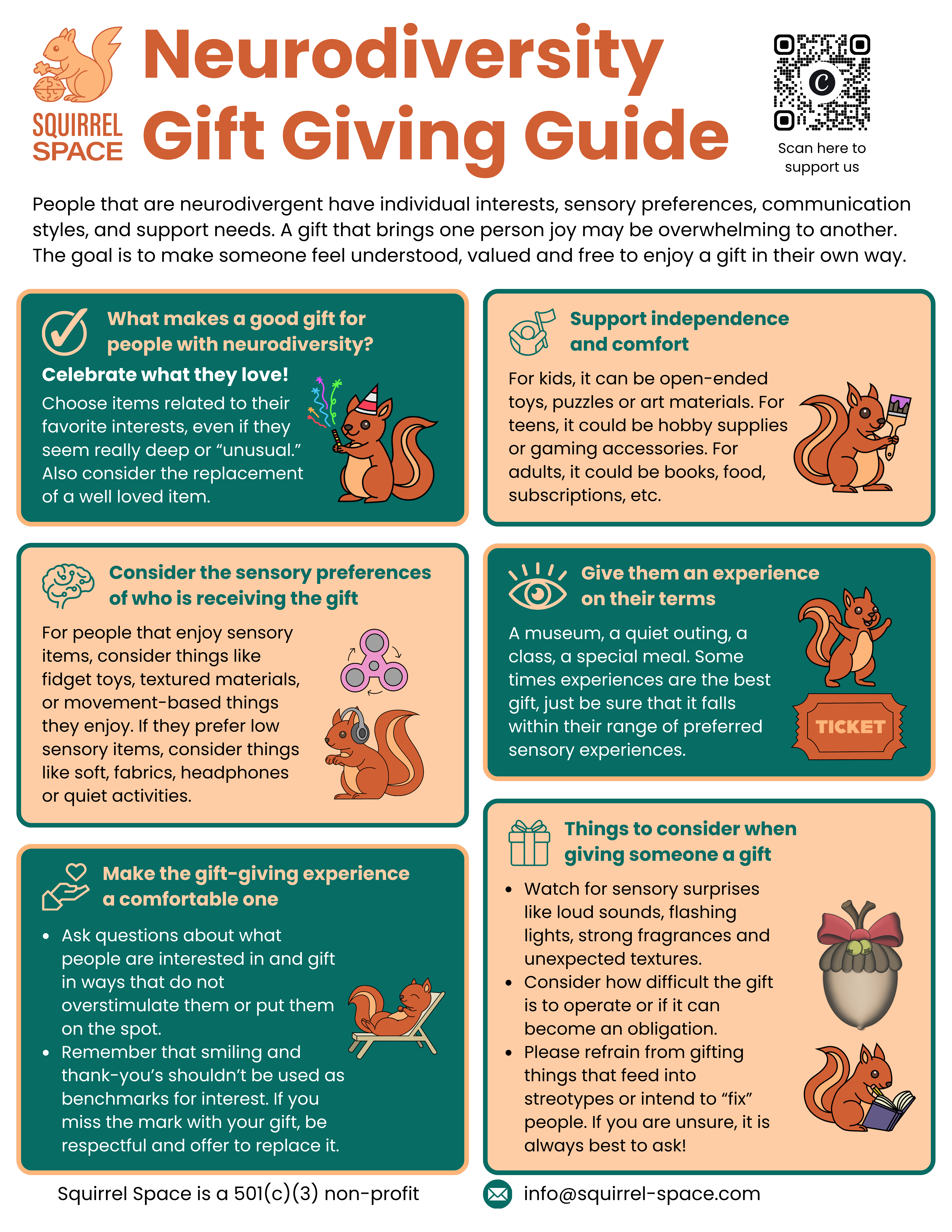
People that are neurodivergent have individual interests, sensory preferences, communication styles, and support needs. A gift that brings one person joy may be overwhelming to another. The goal is to make someone feel understood, valued and free to enjoy a gift in their own way.
 Open the printable guide
Choose items related to their favorite interests, even if they seem really deep or “unusual.” Also consider the replacement of a well-loved item.
For kids: open-ended toys, puzzles or art materials. For teens: hobby supplies or gaming accessories. For adults: books, food, subscriptions.
Sensory seekers may enjoy fidget toys, textured materials or movement-based things. Low-sensory folks may prefer soft fabrics, headphones or quiet activities.
A museum, a quiet outing, a class, a special meal. Just be sure it falls within their range of preferred sensory experiences.
Prices are typical ranges and may vary by store.
Low-sensory comfort in loud places.
For people who enjoy sensory input.
Calming, soft-fabric comfort.
Kids: creative, independent play.
Teens & adults: feed a special interest.
Adults: deep dives into favorite topics.
A gift on their sensory terms.
The 4-step Discovery Journey — Question, Discover, Understand, Re-define.
Learn moreWhat coaching is, how it helps, and how it complements therapy.
Coaching is a collaborative partnership: a trained professional guides you through powerful questions to define goals, set intentions, and create space for change and healing.
Learn moreSquirrel Space is a 501(c)(3) non-profit · info@squirrel-space.com